Osaji Chinedu George & Asibi Danjuma
Taken from “OSAJI”, the publication accompanying the debut solo exhibition “An Endless River”
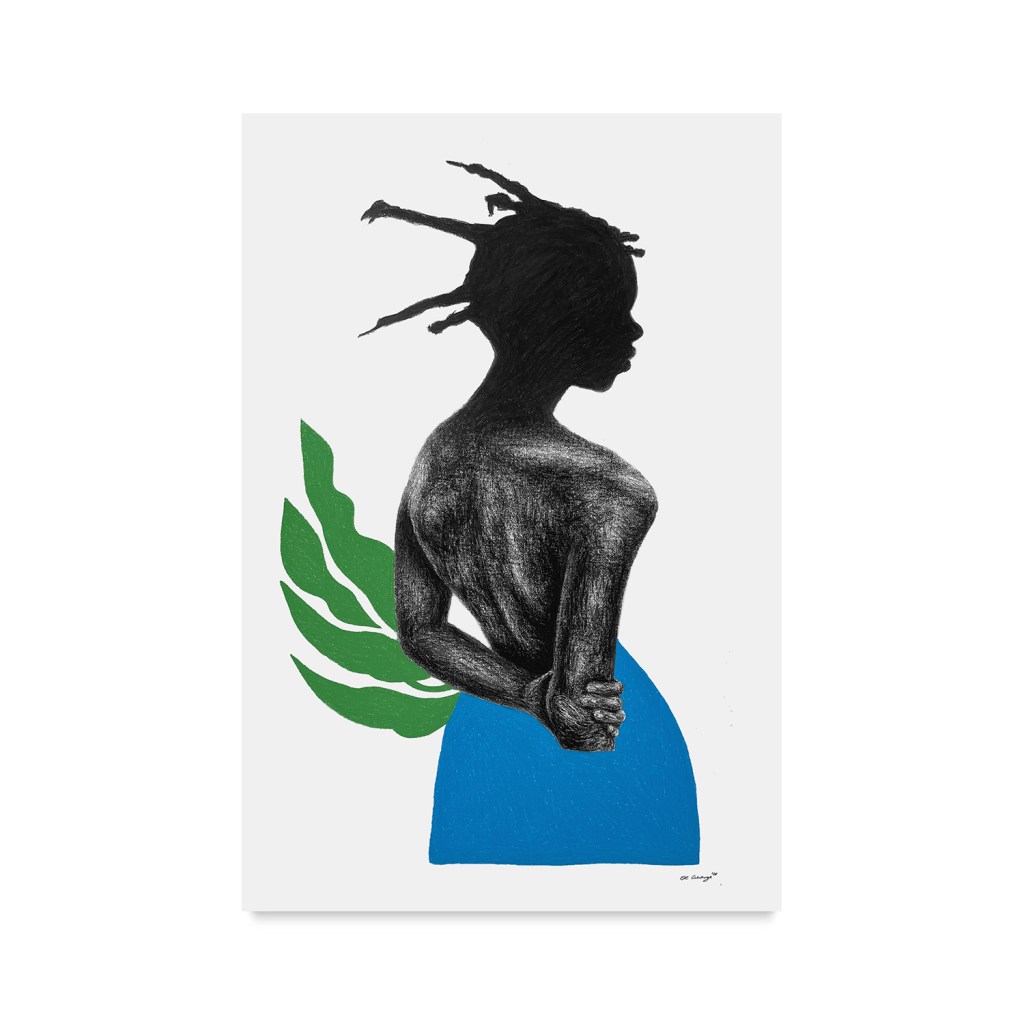
ASIBI: We’ve spoken privately about how I was drawn to your practice several years ago due to your striking visual language. They evoke the feeling of observing a dream within a dream, which prompts me to ask the question, how do you find a confluence between what is imagined and what is lived?
OSAJI: Thank you! The fragility of truth and meaning is a subject that continues to appear in my work, I think this rejection of a fixed definition is why my artistic language naturally leans towards surrealism. I often find myself trying to separate dream memory from lived memory, but sometimes we have to wonder if these are really different lives.
ASIBI: With this body of work, your storytelling does not rely only on what we can see, but also on the language attributed to each piece. Most titles have a metaphoric quality to them. One that really struck me is “A stone in the middle of your throat”, which has quite an emotional punch to it. Could you elaborate on how you arrived at that one in particular?
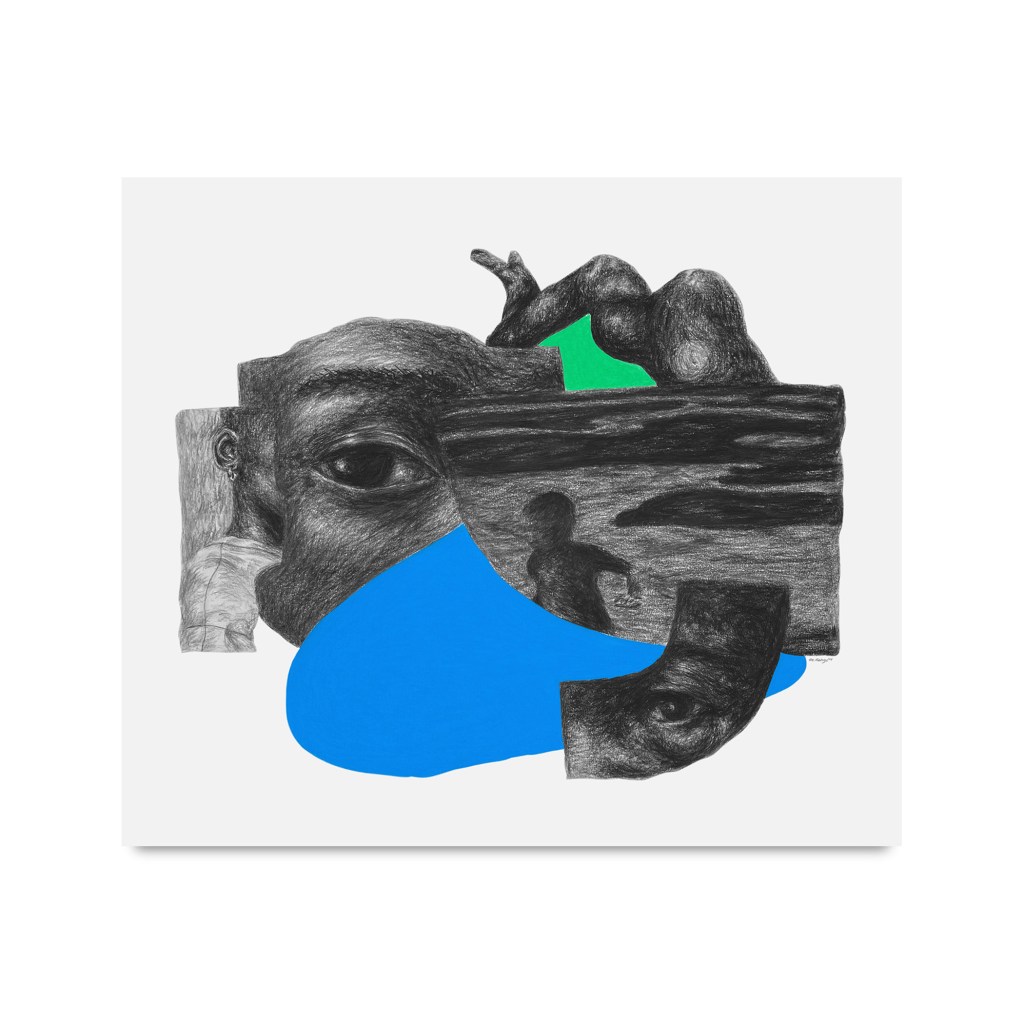
OSAJI: “A stone in the middle of your throat” is primarily about the inherited narratives we carry with us and are unable to outgrow. Those narratives that stretch across different generations of a family. Working on some of the earlier pieces in this exhibition, I was often thinking about how grief never really leaves, it only shrinks over time as we become stronger and learn better ways to live with it.
As the exhibition developed over the years, the tone became lighter as the work grew into the subject of resilience through series like “Psalms of Healing” and “Your strength is my strength”. The idea of fortitude continues in drawings like “Where one falls is where their God pushed them down”. In many ways, this body of work is a reflection on the ambiguity of divine benevolence, it asks us to be willing to negotiate with fate.
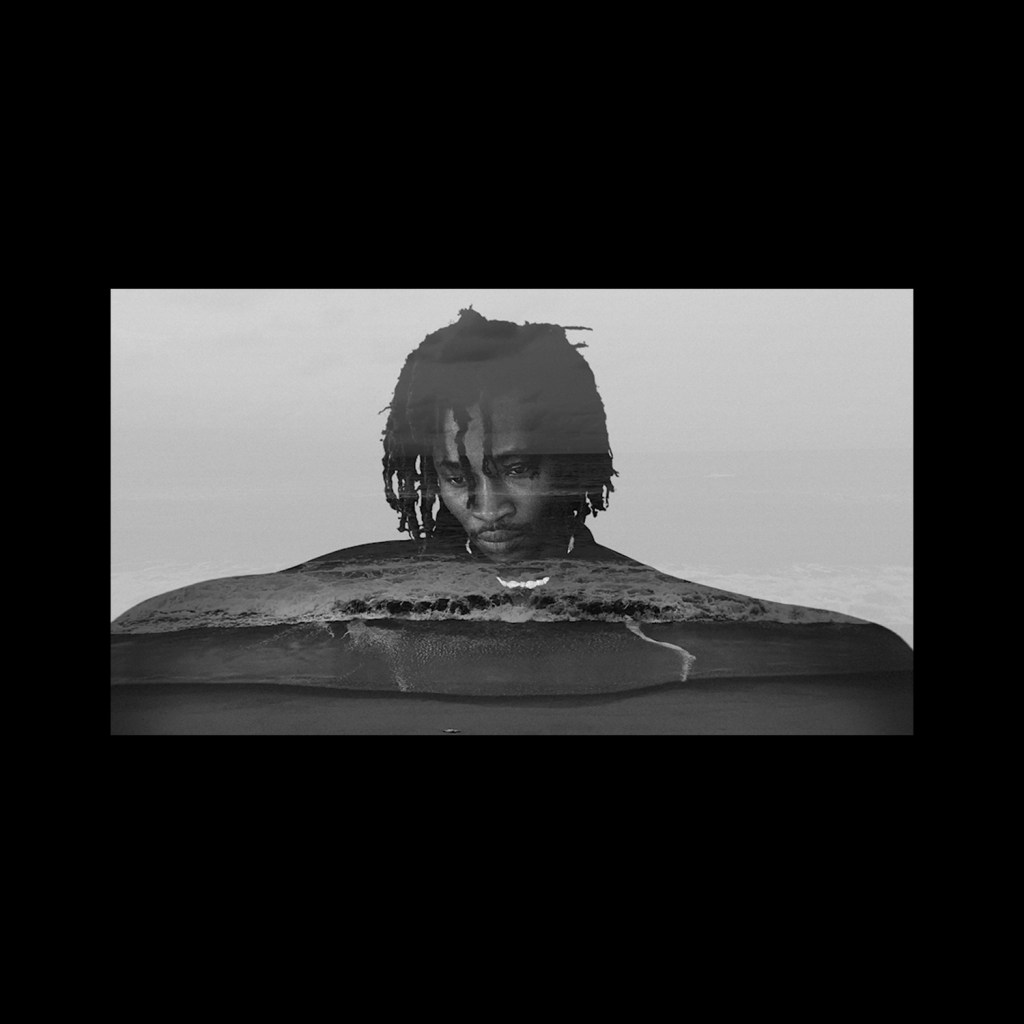
While the video art and a few of the charcoal drawings have some heaviness to them, I was keen on the exhibition containing intervals of hope and comfort.
ASIBI: A characteristic of your oeuvre is often the tension between state and citizen. Does that theme show up in the works we can see, albeit quietly as they are more entrenched in the intimacy of your familial history. In essence, what I’m asking is, how much space did you make for the political within this body of work?
OSAJI: It is impossible to isolate ourselves from the political, it is always lurking in the background giving colour to whatever is going on in the foreground. As intimate as this exhibition is, many of the events that shaped the stories in the work were also shaped by the perpetual tension between the family and the state. Some of my earliest memories are of meeting new cousins, aunts, and uncles at large new year’s parties. Fast forward twenty years later and families have gotten much smaller with less kids and too many relatives thrown to different parts of the world looking for greener pastures. It is difficult to sustain or expand familial connections if the environment is hostile or the government is unsupportive.
ASIBI: Surrealism is still a relatively unexplored landscape in Nigerian contemporary art. What directed you to an exploration of this style and what influences (across mediums) made you arrive there?
OSAJI: In indigenous cultures across Africa, art is often a device to translate the spiritual. It is a tool of ritual, a medium for connecting with the divine within and without. From carved figurines like the Ikenga to the Mmanwu ritual masks, Igbo artists have always lent themselves to the mystical, and what we now call “Surrealism” has always been a language of spiritual expression – a mechanism for bringing the unconscious to the surface. It has existed named and unnamed across many indigenous cultures for thousands of years; I don’t consider it a Western invention. Before Europeans learned about the Niger River, my ancestors knew it by the name Oshimili.
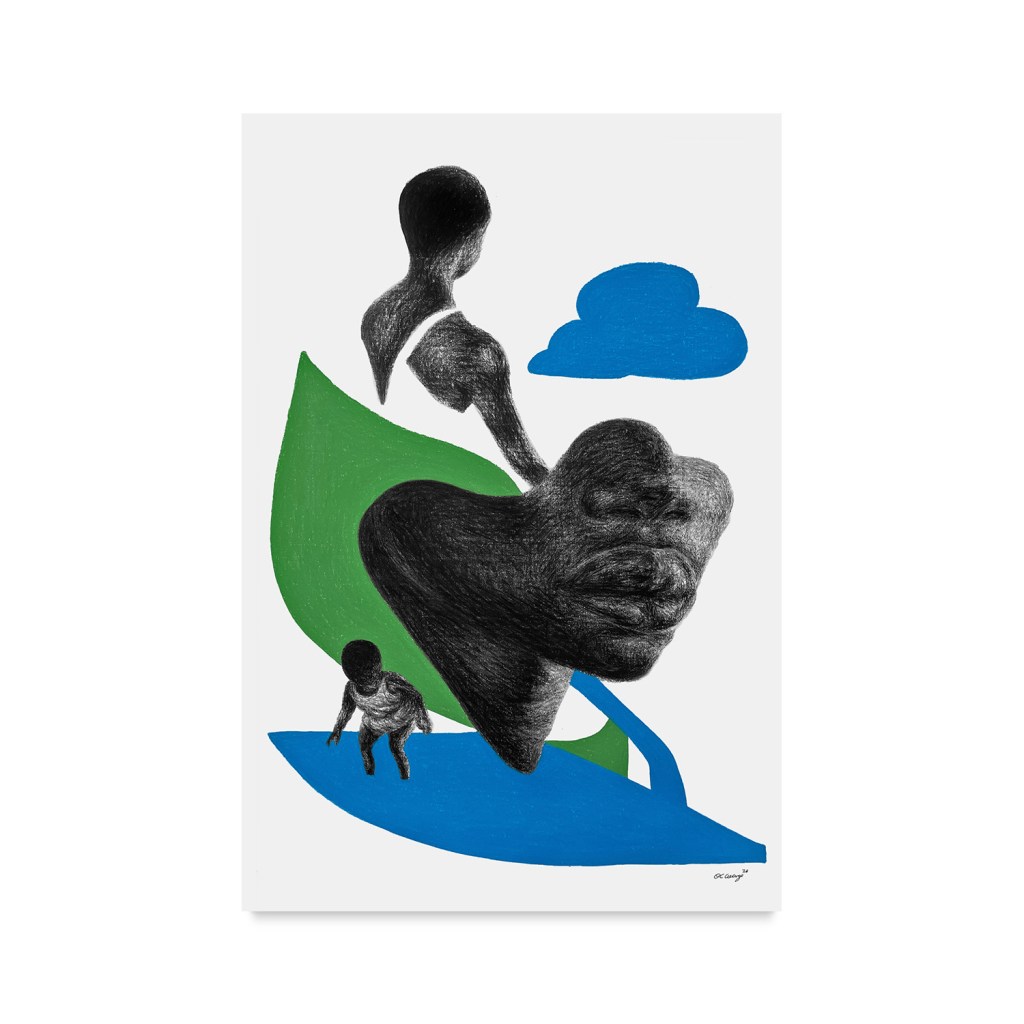
I used to wander and daydream frequently as a child. The natural environment was very fascinating and I was always looking for magic, I’d often run away into fantasy books and cartoons. It is important to make space for the magical, and this space to wander is what surrealism provides in my work. The ambiguity of surrealism also suggests a potential for continuous change, and charcoal as an embodiment of continuity is the perfect device to express this (sound and video as well, I often draw inspiration from German Expressionist Cinema, which was essentially a spiritual response to war and the resulting loss and isolation). As I continue to explore multiple disciplines and mediums, my work continues to detach from reality with just enough familiar fragments left to keep it grounded. Texture and deconstruction have become devices I frequently lean on to explore layered narratives while retaining a dreamlike essence in my work.
ASIBI: The giant Ubulu tree of your father’s heritage appears as an anchoring feature through the works, alongside human eyes as a symbol for connection. I would like you to fixate on the half-visages that appear in your image-making. They look like fragments of a self-portrait to me, but what do they mean to you?
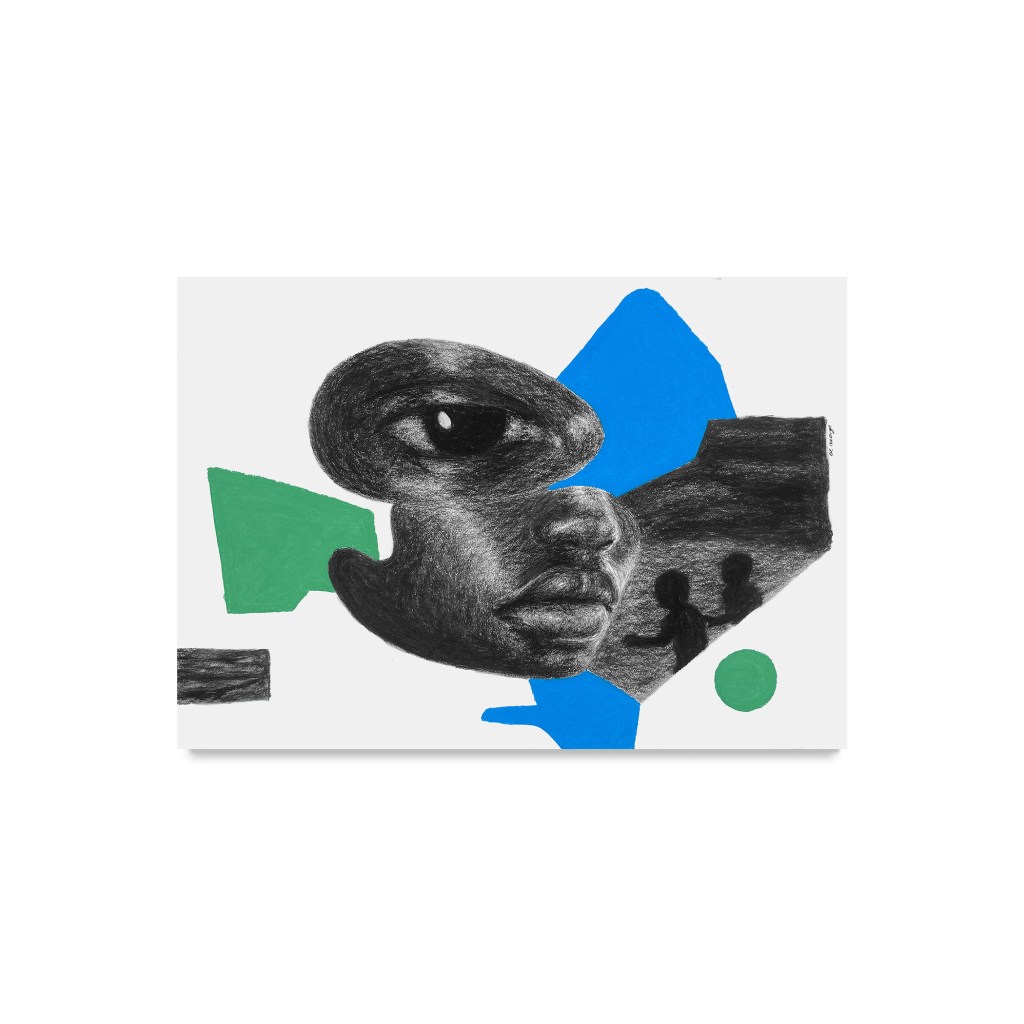
OSAJI: The Ubulu tree is a totem of the Ubulu Clan spread across the Niger Delta and South-Eastern Nigeria. In my work, I think of it as a symbol of cross-generational memory, it is a captivating visual device to depict the truths we inherit and ancestral memory encoded in us. The characters in the work are staged towards that goal as well. They are glimpses of various narratives coming to the surface and vanishing simultaneously, like being underwater. I like to think of these characters as fragments of several past lives.
In drawings like “Guardian Spirit”, “Visitors from the good land”, and “Neverending Beginnings”, silhouetted figures often perform the role of mediators and spiritual guides. Central to this body of work is the idea of ancestral benevolence.
Across this exhibition, there is a constant re-enactment of dreams, the compositions are structured to project the stream of consciousness of a dream, and charcoal as an unforgiving medium that requires presence provides an interesting backdrop.
- Osaji Chinedu George is a multidisciplinary artist from the Niger Delta. His work explores mythology, the fragility of memory, and the politics of belonging
- Asibi Danjuma is a curator, writer, and cultural producer. She is the founder of PHILOS, a creative framework that merges contemporary African art and literature
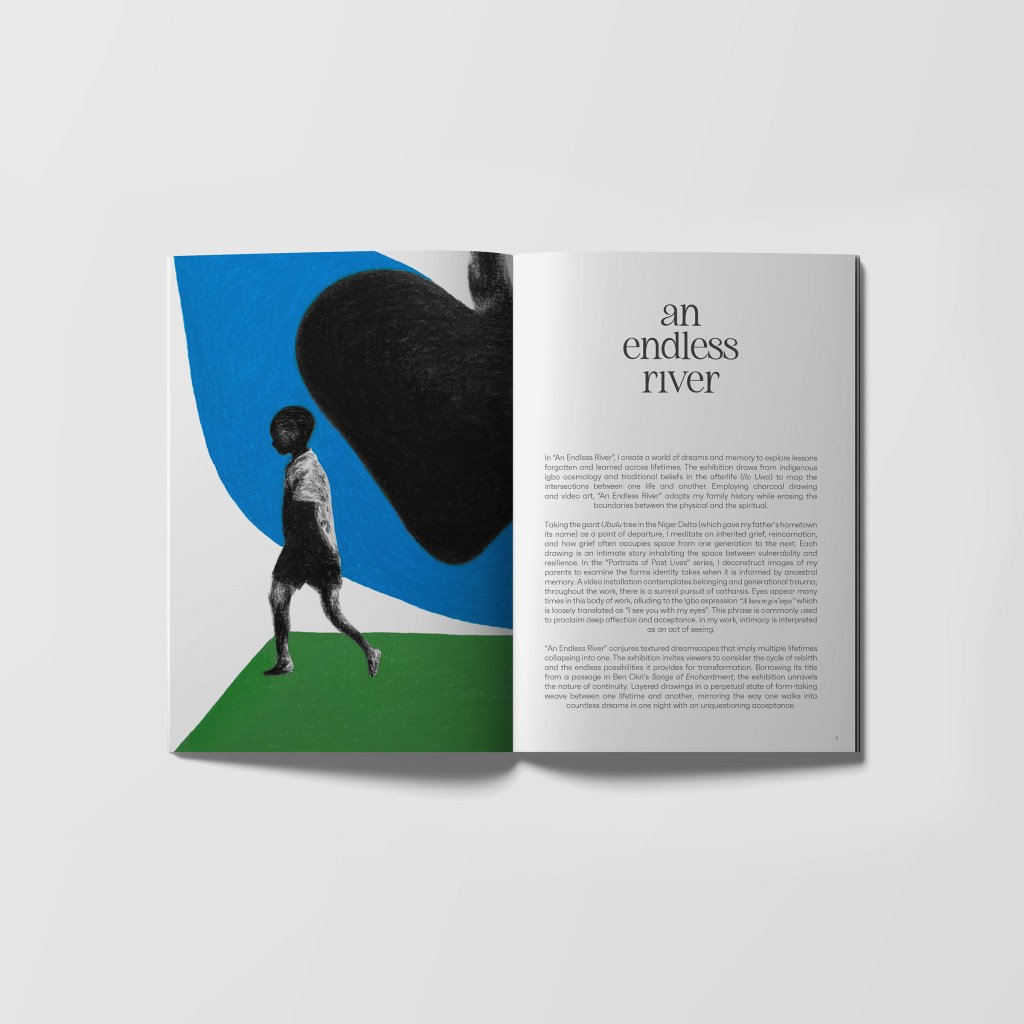
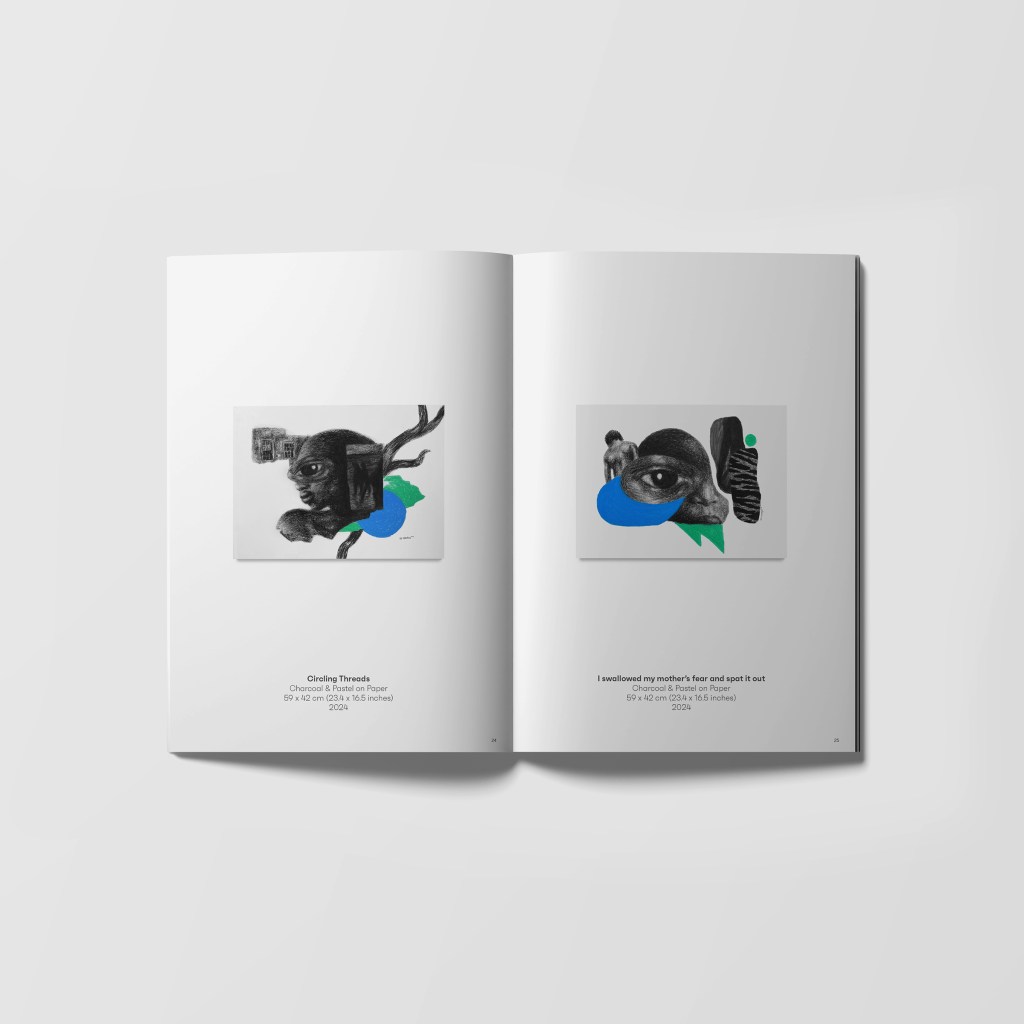
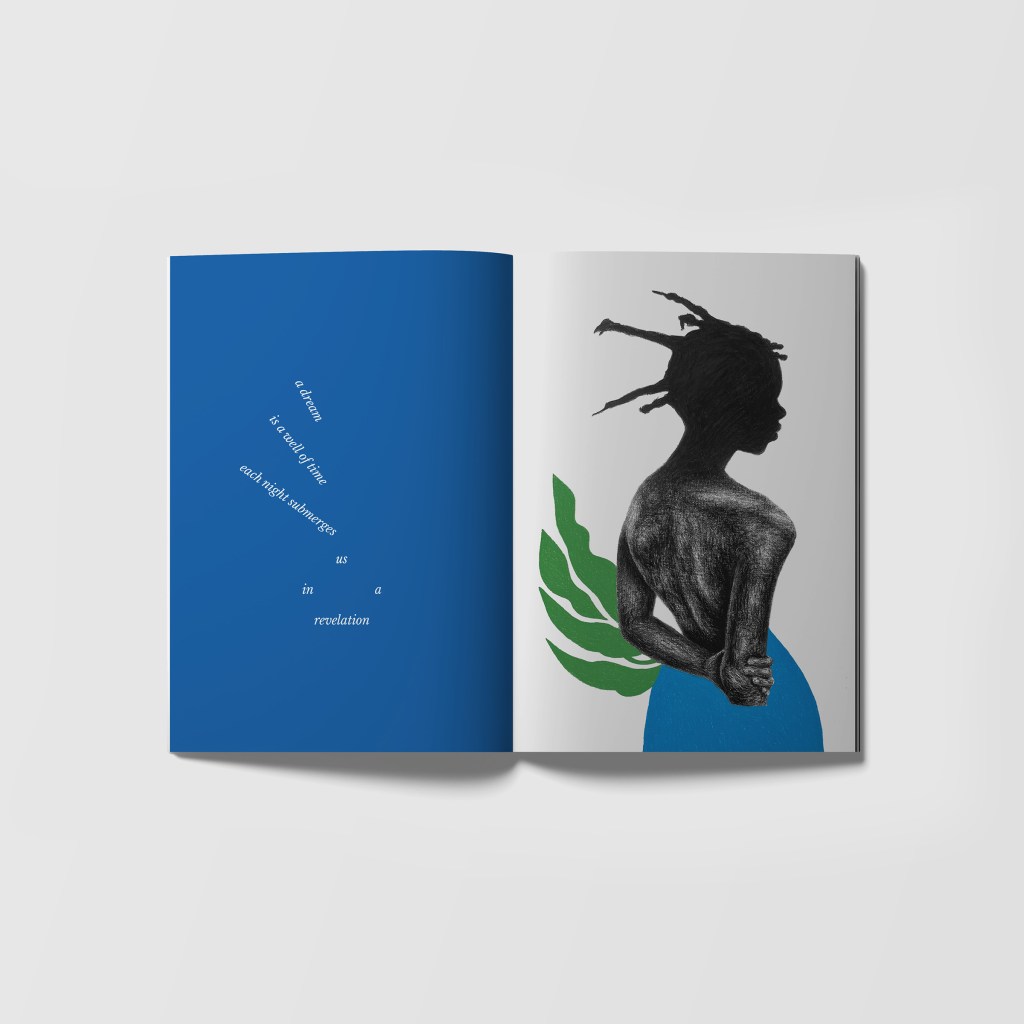
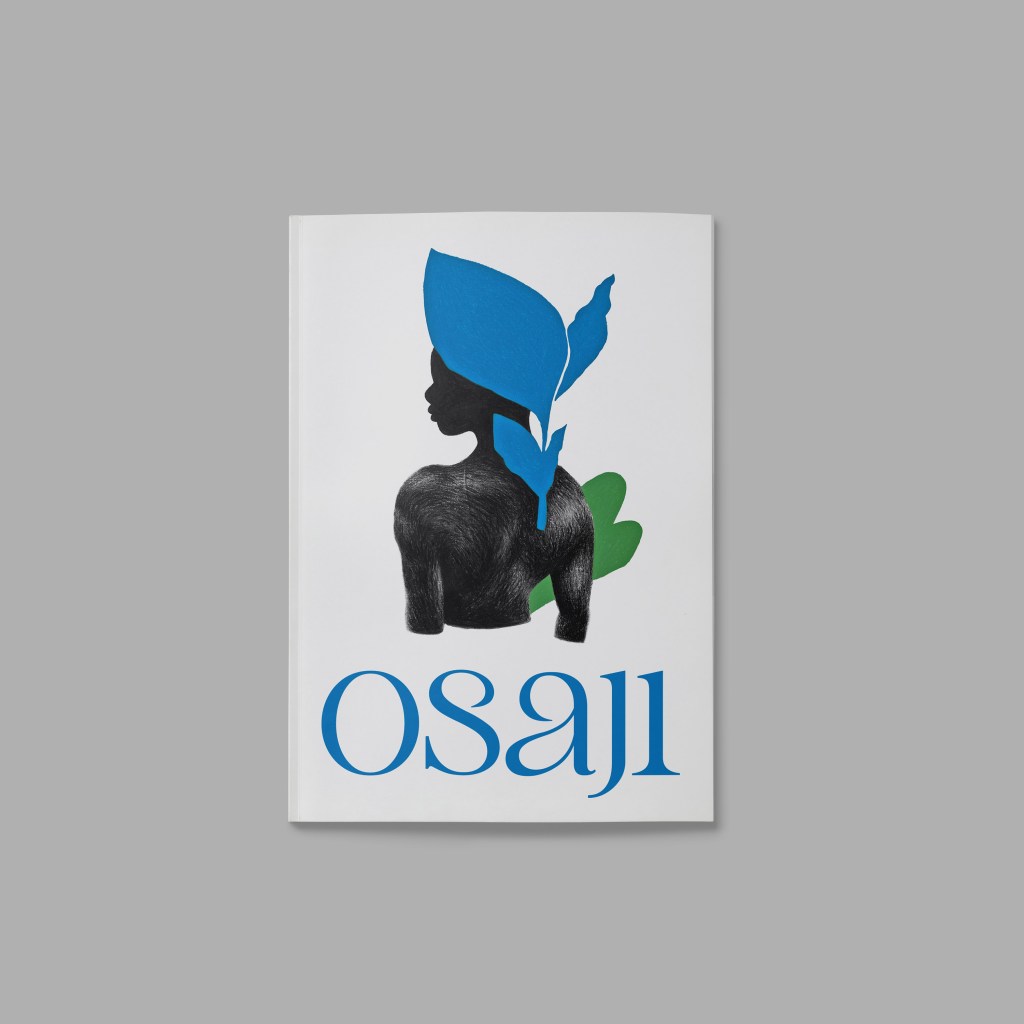
Exhibition Publication, Designed by OSAJI Studio, Published by Osaji Chinedu George

